 graphicsghaar@gmail.com
🔥 सीमित समयको ऑफर — पहिलो ४९ जनाका लागि मात्र
हरेक चाडमा
Designer खोज्ने झन्झट
सकियो!
Nepal का सम्पूर्ण चाडपर्वका Premium PSD Files — एकपटक किन्नुस्, जिन्दगीभर प्रयोग गर्नुस्।
नाम, लोगो, नम्बर मिनेटमै बदल्नुस् — कुनै designer चाहिँदैन!

पहिले: रु. ४,९९९
रु. ७९९
एकपटकको भुक्तानी • कुनै Monthly Fee छैन • Lifetime Access
🛒 अहिले नै अर्डर गर्नुस् — रु. ७९९ मात्र!
✅ Instant Download | ✅ Photoshop 2025 Compatible | ✅ Support Available
🔥 पहिलो ४९ जनालाई Photoshop 2025 निशुल्क! ⚡ सीमित स्टक — अहिले नै अर्डर गर्नुस् 🎉 Nepal का सबै चाडपर्वका PSD Files एकै ठाउँमा 💛 एकपटक तिर्नुस् जिन्दगीभर प्रयोग गर्नुस् 🔥 पहिलो ४९ जनालाई Photoshop 2025 निशुल्क!
📸 PSD Files Preview
यी सबै Fully Editable PSD Files तपाईंको Package मा समावेश छन्

प्रजातन्त्र दिवस

ग्याल्पो ल्होसार

फागु पूर्णिमा (होली)

नारी दिवस

घोडे जात्रा

राम नवमी

राम नवमी

नया बर्ष

नया बर्ष

मातातीर्थ औँसी

ग्याल्पो ल्होसार

नारी दिवस

घोडे जात्रा
🎉
+ अझ धेरै चाडपर्व
समावेश
+ अझ धेरै चाडपर्व
समावेश
✨ यो Package मा के–के पाउनुहुन्छ?
सबै चाहिने कुरा एकै ठाउँमा — Designer बिना पनि Pro Look!
- ✅ Nepal का सम्पूर्ण प्रमुख चाडपर्वका PSD Files
- ✅ Fully Editable Layers — नाम, लोगो, नम्बर मिनेटमै बदल्नुस्
- ✅ High Resolution — Print र Digital दुवैका लागि
- ✅ Photoshop 2025 सम्म Compatible
- ✅ Once Pay — Lifetime Use, कुनै Renewal छैन
- ✅ Editing Guide Video Tutorial सहित
- ✅ AnyDesk Support Available
- ✅ Instant Download after Payment
- 🎁 BONUS: Photoshop 2025 निशुल्क (पहिलो ४९ जनाका लागि)
मिनेटमा Edit गर्नुस्
Smart Object र Editable Text Layers को साथ, तपाईंको नाम र लोगो राख्न केही मिनेट मात्र लाग्छ।
हजारौं बचाउनुस्
हरेक चाडमा Designer लाई रु. ५००–२००० तिर्नुको सट्टा एकपटक मात्र रु. ७९९ तिर्नुस् र जिन्दगीभर प्रयोग गर्नुस्।
Professional Look
Market मा बिक्री भइरहेको Premium Quality Design — तपाईंको Business को Brand Image बढाउनुस्।
सबैका लागि उपयुक्त
Salon, Shop, Restaurant, Agency, School, Hospital — जुनसुकै Business का लागि Perfect!
🎬 पूर्ण Tutorial र Support
तपाईं Photoshop नजान्नुभए पनि हुन्छ — हामी सिकाउँछौं!
Full Video Tutorial
AnyDesk Support
WhatsApp Help
Instant Response
📹 पूर्ण Video Tutorial सहित आउँछ!
हरेक PSD File कसरी Edit गर्ने भन्ने Step-by-Step Video Guide Package मा समावेश छ।
थप सहयोग चाहिएमा हाम्रो AnyDesk Remote Support मार्फत हामी आफैं तपाईंको Computer मा आएर Edit गरिदिन्छौं।
Photoshop नजान्नुभए पनि ३०–४५ मिनेटमा सिक्न सक्नुहुन्छ!
🎁 Special Bonus
पहिलो ४९ जनाका लागि
पहिलो ४९ जनाका लागि
Photoshop 2025 निशुल्क!
अहिले नै अर्डर गर्नुस् र Adobe Photoshop 2025 को Full Version निशुल्क पाउनुस्! यो ऑफर सीमित समयका लागि मात्र हो।
💬 ग्राहकहरूले के भन्छन्?
हजारौं Businesses ले पहिल्यै प्रयोग गरिसकेका छन्
⭐⭐⭐⭐⭐
“सच्चै काम लाग्यो! दशैंको Post बनाउन मलाई पहिले Designer लाई रु. १५०० दिनुपर्थ्यो, अब आफैं ५ मिनेटमा बनाउँछु। Best Investment!”
रमेश श्रेष्ठ
Salon Owner, Kathmandu
⭐⭐⭐⭐⭐
“Video Tutorial धेरै राम्रो छ। मलाई Photoshop आउँदैनथ्यो, तर Tutorial हेरेर सजिलै सिकें। AnyDesk Support पनि तुरुन्त Help गर्नुभयो!”
सुनिता तामाङ
Boutique Owner, Pokhara
⭐⭐⭐⭐⭐
“मेरो Agency का सबै Clients को चाडपर्वको Post अब यही बाट बनाउँछु। Quality एकदमै High छ। रु. ७९९ मा यति राम्रो Package? Unbelievable!”
अमित गुरुङ
Digital Marketing Agency, Butwal
⏰ ऑफर सकिन बाँकी समय
00
घण्टा
00
मिनेट
00
सेकेन्ड
आजै रु. ७९९ मा
जिन्दगीभरको Solution पाउनुस्!
Monthly subscription? छैन।
Renewal? छैन।
झमेला? छैन।
एकपटक तिर्नुस् — जिन्दगीभर प्रयोग गर्नुस्!
📲 “INFO” DM गर्नुस् — अहिले नै!
🛡️
100% Satisfaction Guarantee — तपाईं खुसी नभए पैसा फिर्ता!
100% Satisfaction Guarantee — तपाईं खुसी नभए पैसा फिर्ता!
🔒 Secure Payment
⚡ Instant Delivery
💬 24/7 Support
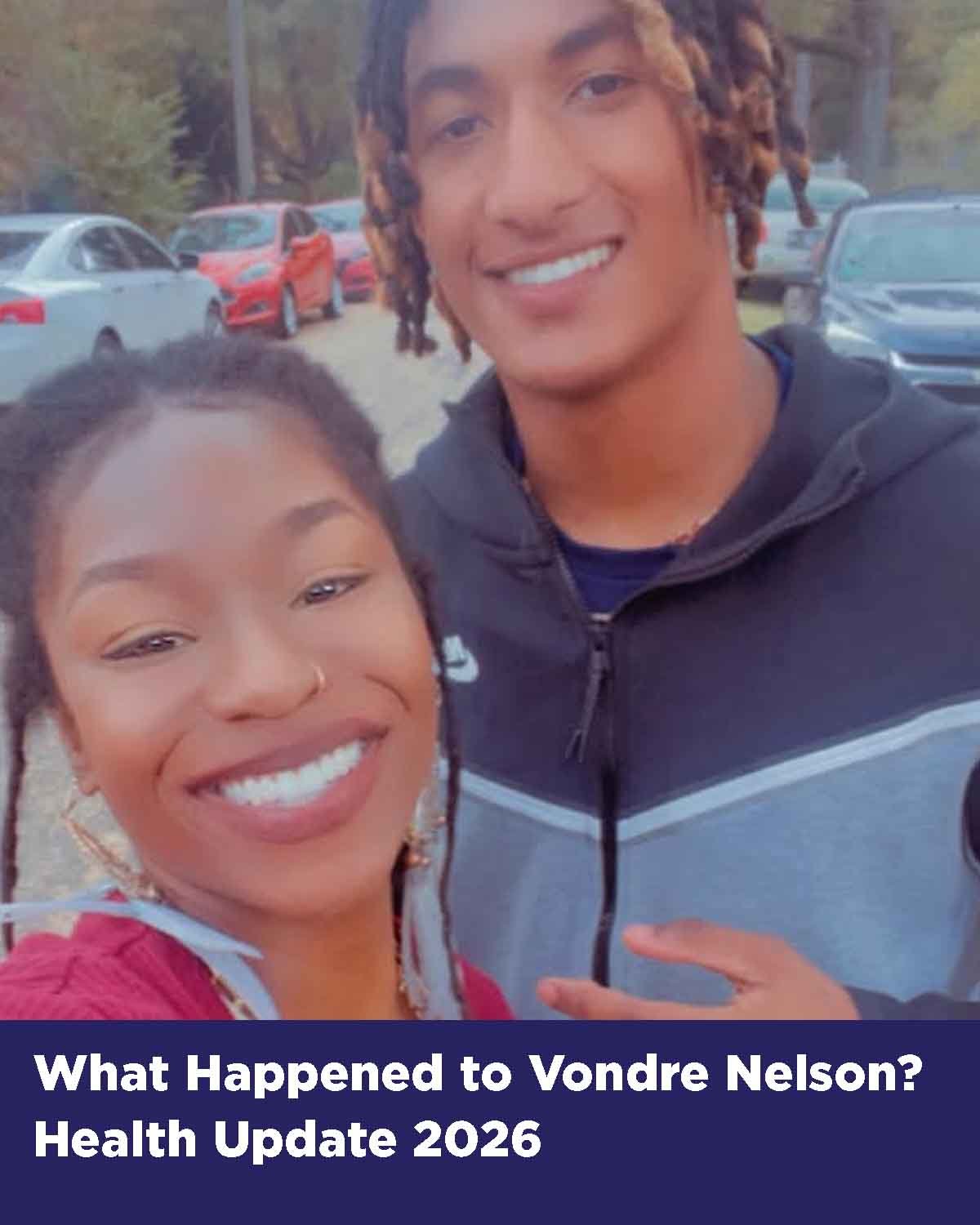
What Happened to Vondre Nelson? Health Update 2026
📋 Table of Contents
- Introduction — Methodist University Mourns Vondre Nelson
- Who Was Vondre Nelson?
- What Happened? — Car Accident & Death 2026
- Football Community Mourns — Tributes & Reactions
- Community Statement — Watch Out Cumberland County NC
- Methodist University’s Official Statement
- Counseling & Support Resources at Methodist University
- Vondre Nelson’s Legacy — Player, Student & Leader
- Vondre Nelson’s Family & Hometown
- Conclusion
🏈 Quick Facts — Vondre Nelson
Full NameVondre Nelson
PositionWide Receiver (WR)
TeamMethodist University Monarchs Football
ClassFreshman (2024 Roster)
Height / Weight6’1″ / 160 lbs
ProgramsBusiness Management & Accounting
HometownMurrayville, Georgia
High SchoolWhite County High School, Class of 2024
Cause of DeathCar Accident (April 2026)
InvestigationOngoing — Details Not Yet Disclosed
Death ReportedApril 2026
StatusDeceased — 2026
Introduction
Methodist University Mourns the Sudden and Heartbreaking Loss of Wide Receiver Vondre Nelson
The Methodist University community in Fayetteville, North Carolina is mourning with profound sorrow the sudden and devastating loss of Vondre Nelson — a wide receiver for the Methodist University Monarchs football team, a student in the Business Management and Accounting programs, and a young man whose energy, leadership, and presence on campus made him a beloved member of his team and university community. His passing in April 2026 following a tragic car accident has sent shockwaves of grief across the Monarchs athletic program, across the broader Methodist University campus, and across the community of Murrayville, Georgia where he grew up.
Vondre Nelson was a freshman on the 2024 Monarchs roster — a young man barely at the beginning of his college journey, with years of football, academic growth, and personal development still ahead of him. At 6-foot-1 and 160 pounds, he brought a lean, agile frame to the wide receiver position and embodied the kind of competitive spirit and campus presence that coaches and teammates described when remembering him as a leader among his peers. His loss at such a young age, in such sudden and tragic circumstances, is a reminder of how fragile and precious every moment of a young person’s college experience truly is.
Methodist University — Official Statement, April 2026
“It is with deep sadness that we share the passing of Vondre Nelson from Murrayville, Georgia, a student in our Business Management and Accounting programs. Vondre tragically lost his life as the result of a car accident. As we process this loss, we encourage anyone in need of support to reach out to campus resources, including counseling services, faculty, or staff members. Supporting one another during times like this is essential to our community.”
— Methodist University Official Statement, April 2026This tribute honors Vondre Nelson’s life — not just the tragedy of its ending, but the fullness of who he was in the months he spent at Methodist University: a football player working to develop his game, a student pursuing a business education, a teammate known for his leadership, and a young man from Murrayville, Georgia who had worked hard to earn his place in the Monarchs program and on the Methodist University campus.
Biography
Who Was Vondre Nelson? — WR, Student & Campus Leader at Methodist University
Vondre Nelson was a wide receiver for the Methodist University Monarchs — a member of the program’s 2024 freshman class who had arrived in Fayetteville, North Carolina from Murrayville, Georgia, where he had graduated from White County High School in the Class of 2024. He was a first-year college student, still in the earliest stages of what should have been a four-year journey of athletic and academic development at a university known for its competitive Division III football program and its commitment to the student-athlete experience.
At 6 feet 1 inch and 160 pounds, Nelson brought a lean and agile physical profile to the wide receiver position — the kind of frame that, at the college level, suggests a player still filling out physically and whose best football lies ahead of him. His role on the Monarchs offense involved the foundational work of becoming a college receiver: developing route-running precision, improving his speed and agility through training, and building the kind of chemistry with the quarterback and offensive unit that only comes through time and shared practice repetitions. He was at the very beginning of that process — and by all accounts, he was a willing and capable participant in it.
🎓 Student in Business Management & Accounting: Beyond football, Vondre Nelson was enrolled at Methodist University in the Business Management and Accounting programs — a dual academic focus that reflects ambition, intellectual seriousness, and a clear sense of purpose beyond the football field. At Division III institutions like Methodist, where student-athletes are expected to be fully committed to both their sport and their studies, a first-year student who arrives with clear academic goals is exactly the kind of person a university program is built to serve and support.
Those who knew Vondre on campus remember him not just as a football player but as a genuine campus presence — someone who was active in extracurricular activities beyond the football program and who was described by his community as a leader among his peers. That description — leader — carries real weight when applied to a college freshman. It reflects a maturity, a social intelligence, and a natural capacity to influence the people around him in positive ways that most 18-year-olds are still developing. Vondre Nelson had it from the beginning. And the Methodist University community recognized and responded to it.
Accident — Death Update 2026
What Happened to Vondre Nelson? — The Car Accident & Community’s Grief
Vondre Nelson passed away in April 2026 following a tragic car accident. The specific details of the accident — its location, the circumstances that led to it, and the sequence of events — have not been publicly disclosed, as the investigation into the incident remains ongoing. Authorities have not yet released the full details of what occurred, and out of respect for the Nelson family’s privacy and the active nature of the investigation, those details are not speculated upon here. What is known is that Vondre Nelson lost his life as a result of the accident, and that his death was sudden, unexpected, and devastating for everyone who knew and loved him.
The news of his passing was first shared publicly through Watch Out Cumberland County NC, a community Facebook page that announced his death with a tribute that captured both the specific facts of who Vondre was and the breadth of the loss his community is feeling. Methodist University subsequently released its own official statement confirming his passing, expressing the university’s grief, and directing students, faculty, and staff to available counseling and support resources. The response from both the university and the broader community reflected the genuine impact that a single young person can have on the people and institutions around them in a remarkably short period of time.
“Sooo many memories we had to make 😢, Vondre 🕊️🤍 I will love you forever, big dude. ♾️🤍💔🕯️”
— DeVondria Williams, Facebook, April 2026
The personal tributes that have followed the announcement of Vondre’s death speak to the specific and irreplaceable connections he had built in his time at Methodist University and in his life before it. His friends, his teammates, and his community have responded with the particular grief of people who recognize that something genuinely rare and genuinely valuable has been lost — a young person whose best years were still ahead of them, whose potential was still unfolding, and whose presence was already making a difference in the lives of the people around him.
Community Tributes
Football Community Mourns — Tributes, Reactions & Shared Grief
The response to Vondre Nelson’s passing from the Methodist University community, from the Monarchs football program, and from the broader network of people who knew him has been an outpouring of love, grief, and heartfelt tribute that reflects the impact he made in his short time on campus and in his life before it. Teammates, classmates, friends from home, and members of the broader Fayetteville and Murrayville communities have come forward with memories, messages, and expressions of loss that paint a vivid picture of who Vondre was as a person.
The tribute shared by Watch Out Cumberland County NC was among the first public announcements of his passing, and its language — emphasizing his leadership, his campus involvement, and his identity as more than just a football player — set the tone for the community’s collective remembrance. The post described him as active on campus beyond the football program, engaged in extracurricular activities, and known among his peers as a leader. For a freshman student who had been on campus for only months, that description is remarkable. It speaks to a young person who arrived at Methodist University with a presence that was impossible to miss.
🏈 Methodist University Monarchs Football: Methodist University competes in NCAA Division III as a member of the USA South Athletic Conference. The Monarchs football program is part of a broader athletic tradition at the university that emphasizes the integration of athletic excellence and academic achievement. Vondre Nelson was part of that tradition — a student-athlete whose commitment to both his sport and his business studies reflected the dual identity that Division III football demands of its players.
The personal tribute from DeVondria Williams — expressing love for “big dude” and the grief of memories that will now never be made — captures something that no institutional statement can: the specific, intimate, irreplaceable grief of losing a person you loved and expected to grow old alongside. That grief, expressed publicly on social media, has been echoed by dozens of others who knew Vondre and who are now processing the reality that the future they imagined alongside him will not unfold as they had hoped.
Community Statement
Watch Out Cumberland County NC — Community Tribute Post
The following tribute was shared publicly by Watch Out Cumberland County NC on Facebook, announcing Vondre Nelson’s passing and honoring his memory as a student, athlete, and leader at Methodist University:
The post captures in a few lines everything that those who knew Vondre want the world to understand about him: that he was a student, a football player, a campus leader, and a person whose presence was felt and valued by the community around him. That he came from Murrayville, Georgia, where a community is also grieving. That he was 18 years old, just beginning. And that the people who knew him are holding each other right now in the way that communities hold each other when they lose someone they were not ready to lose.
Also Read — Sports Profile 2026
Who Is Tyrrell Glen Hatton? — Ethnicity & Religion 2026 | Background, Heritage & Faith
Curious about the personal backgrounds and cultural identities of prominent sports figures in 2026? Tyrrell Glen Hatton’s ethnicity, religion, nationality, and family heritage are explored in full in this dedicated 2026 profile — covering his English roots, his faith, and the complete personal story behind one of professional golf’s most recognizable and talked-about personalities. Read the full Tyrrell Hatton ethnicity and religion breakdown for 2026.
Read Full Profile →
Official Statement
Methodist University’s Official Statement — A Campus in Mourning
Methodist University released an official statement following the announcement of Vondre Nelson’s passing — a carefully worded communication that confirmed the facts of his death, expressed the university’s collective grief, directed the campus community to available support resources, and modeled the kind of institutional compassion that a campus community needs from its leadership during a moment of shared loss. The statement acknowledged Vondre by name, by hometown, and by academic program — treating him as a whole person rather than simply as a number or an athletic roster entry — and committed the university’s resources to supporting those who are grieving.
Methodist University — Full Official Statement, April 2026
“It is with deep sadness that we share the passing of Vondre Nelson from Murrayville, Georgia, a student in our Business Management and Accounting programs. Vondre tragically lost his life as the result of a car accident. As we process this loss, we encourage anyone in need of support to reach out to campus resources, including counseling services, faculty, or staff members. Supporting one another during times like this is essential to our community.”
— Methodist University, Official Campus Statement, April 2026The statement’s closing line — “Supporting one another during times like this is essential to our community” — is not boilerplate. It is a genuine institutional commitment to the kind of collective care that Vondre himself, by all accounts, embodied as a leader among his peers. The university is asking its community to do what Vondre did: to show up for one another, to carry each other through difficulty, and to find in shared grief a reminder of shared humanity. That is a profound and fitting tribute to someone who was known for exactly those qualities.
Campus Support
Counseling & Support Resources at Methodist University
In the immediate aftermath of the announcement of Vondre Nelson’s passing, Methodist University moved quickly to make counseling and support resources available to students, faculty, and staff who are processing grief and the emotional impact of this sudden loss. The university’s response reflects best practices in campus crisis support — providing multiple access points, multiple formats, and a sustained commitment to the wellbeing of everyone affected rather than a single one-time announcement.
💚 Methodist University Support Resources — Available Now:
For Students: Walk-in individual counseling sessions are available at Health & Counseling Services at The Well in West Hall from 2–5 p.m. through Friday. Group debriefings are scheduled for Thursday at 6:30 p.m. and Friday from 12:30 to 1:30 p.m. Additional support is available through Student Affairs, Religious & Spiritual Life, and MU Counseling Services, which operates Monday through Friday from 8 a.m. to 5 p.m. and can be reached by phone or walk-in.
For Faculty & Staff: An Employee Assistance Program counselor is available, along with group debriefings at Hensdale Chapel and follow-up individual support opportunities.
For Students: Walk-in individual counseling sessions are available at Health & Counseling Services at The Well in West Hall from 2–5 p.m. through Friday. Group debriefings are scheduled for Thursday at 6:30 p.m. and Friday from 12:30 to 1:30 p.m. Additional support is available through Student Affairs, Religious & Spiritual Life, and MU Counseling Services, which operates Monday through Friday from 8 a.m. to 5 p.m. and can be reached by phone or walk-in.
For Faculty & Staff: An Employee Assistance Program counselor is available, along with group debriefings at Hensdale Chapel and follow-up individual support opportunities.
The university’s decision to provide both individual and group support formats — recognizing that different people process grief differently, and that some will need private space while others will find healing in shared community experience — reflects a sophisticated and compassionate approach to campus mental health in the aftermath of tragedy. Students, faculty, and staff who are struggling are strongly encouraged to use these resources. Vondre himself, as a campus leader, would have been among the first to encourage those around him to reach out for help when they needed it.
Legacy
Vondre Nelson’s Legacy — Player, Student, Leader & Light on Campus
Vondre Nelson’s legacy at Methodist University, though built in the brief span of a freshman year, is already clear and already permanent. He was a football player who was working to develop his craft, a business student who was building the academic foundation for a professional future, and a campus leader who was recognized by his peers for the quality and authenticity of his presence in their shared community. Those three dimensions of his identity — athlete, student, leader — are the dimensions that his university, his teammates, and his community are honoring in the days since his passing.
As a wide receiver, the work he was doing — developing route-running skills, improving speed and agility, building chemistry with his quarterback and offensive teammates — is the invisible work that every young college receiver does before they become the player the world sees on game days. Vondre was in that process. He was building something. And the football community’s mourning of his loss reflects their understanding of what his potential represented and what his absence means for the program that was developing him.
“He was active on campus, including involvement with the football team and extracurricular activities, and was known as a leader among his peers. Prayers are with his family, friends, teammates, and all those affected during this difficult time.”
— Watch Out Cumberland County NC, Facebook, April 2026
His academic pursuit of Business Management and Accounting tells its own story about who Vondre Nelson was as a person — a student who arrived at Methodist University with a plan, with goals beyond the football field, and with the self-awareness to understand that a college education is about more than athletics. That kind of dual commitment — to sport and to academic purpose — is what Division III college athletics is built around, and Vondre embodied it from his very first semester.
Also Read — Sports Profile 2026
Who Is Tyrrell Glen Hatton? — Ethnicity & Religion 2026
A full 2026 profile of Tyrrell Glen Hatton’s ethnicity, religion, and personal background — exploring the heritage and faith of one of golf’s most prominent and recognizable personalities.
Read Full Profile →
Also Read — Health Update 2026
What Happened to Karen Schooley? — Health Update 2026
Karen Schooley’s health update and full 2026 story — what happened, the latest developments, and a complete tribute to a person whose story has resonated with communities across the country.
Read Full Update →
Family & Hometown
Vondre Nelson’s Family & Hometown — Murrayville, Georgia & White County High School
Vondre Nelson came to Methodist University from Murrayville, Georgia — a small community in Hall County in northeastern Georgia, part of the Gainesville metropolitan area. He was a graduate of White County High School in the Class of 2024, which means he arrived at Methodist University just months before his passing — a freshman who had only recently made the transition from high school athlete to college student-athlete, from the familiarity of home to the new world of a university campus hundreds of miles from where he grew up.
The community of Murrayville, Georgia is grieving alongside the Methodist University campus. The people who knew Vondre from his childhood, from his high school years at White County, from the community that watched him grow up and celebrated when he earned his place at a college football program — they are holding a grief that is every bit as real and every bit as devastating as the grief felt in Fayetteville. Two communities, separated by miles, united in loss for the same young man.
📍 Murrayville, Georgia — Vondre’s Hometown: Murrayville is a small unincorporated community in Hall County, northeastern Georgia — a close-knit area where young people who go on to compete at the college level are celebrated by their communities and remembered when they are gone. White County High School, where Vondre graduated in the Class of 2024, is located in Cleveland, Georgia — the county seat of neighboring White County. Both communities are united in mourning one of their own.
His family — the people who raised him, who supported his athletic dreams, who drove him to practices and games, who celebrated his college acceptance and watched him leave for Fayetteville — are the ones who have lost the most. Their specific details have not been shared publicly, and their privacy is honored here completely. What belongs to the Nelson family belongs to them. The community surrounds them with love and with prayer, in Murrayville, in Fayetteville, and across the wider network of people whose lives Vondre touched in his eighteen years.
Also Read — Health Update 2026
What Happened to Karen Schooley? — Health Update 2026 | Full Story & Latest Developments
2026 has brought difficult news to many communities across the United States. Karen Schooley’s health update is one of the most-searched stories of the year — covering what happened to her, the latest confirmed developments, and the full context of a story that has resonated with communities from coast to coast. Whether you’re following the story for the first time or looking for the most current update, this comprehensive 2026 health update has everything you need to know.
Read Full Update →
Conclusion
Conclusion — Vondre Nelson Will Be Remembered as a Player, a Student, and a Light
Vondre Nelson was eighteen years old. He was a wide receiver for the Methodist University Monarchs. He was a business student. He was a campus leader. He was from Murrayville, Georgia, a graduate of White County High School, a person known by his teammates and classmates as someone whose presence made every space he occupied better. He was at the very beginning of everything. And he was taken far too soon, in a car accident in April 2026 that has left two communities — Fayetteville and Murrayville — in a grief that will take a long time to move through.
As Methodist University makes counseling resources available and as the Monarchs football community finds ways to honor his memory going forward, what Vondre himself would want — if those who knew him have any doubt — is exactly what his university and his community are doing: supporting each other, reaching out for help when it is needed, and carrying his memory forward by being the kind of people he already was. A leader. A teammate. A student who showed up. A young man who made people feel his presence.
Rest in Heaven, Vondre Nelson. You were loved. You will be remembered. And the light you brought to the Methodist University campus will not go out just because you are no longer here to carry it.
In Loving Memory of Vondre Nelson
“Vondre will always be remembered for his unforgettable contributions as a wide receiver, as a student, and as a leader among his peers — a young man from Murrayville, Georgia who arrived at Methodist University ready to give everything he had and did exactly that in every day he was there.”
Rest in Heaven — Vondre Nelson · Methodist University Monarchs · Murrayville, GA · 2026
💚 Leave a Condolence Message
Share your memories of Vondre Nelson. Whether you were his teammate, a classmate at Methodist University, a friend from White County High School, or a community member — your words bring comfort to his family during this devastating time.✅ Thank you. Your condolence has been received. The Nelson family and the Methodist University community are grateful for your love and support.
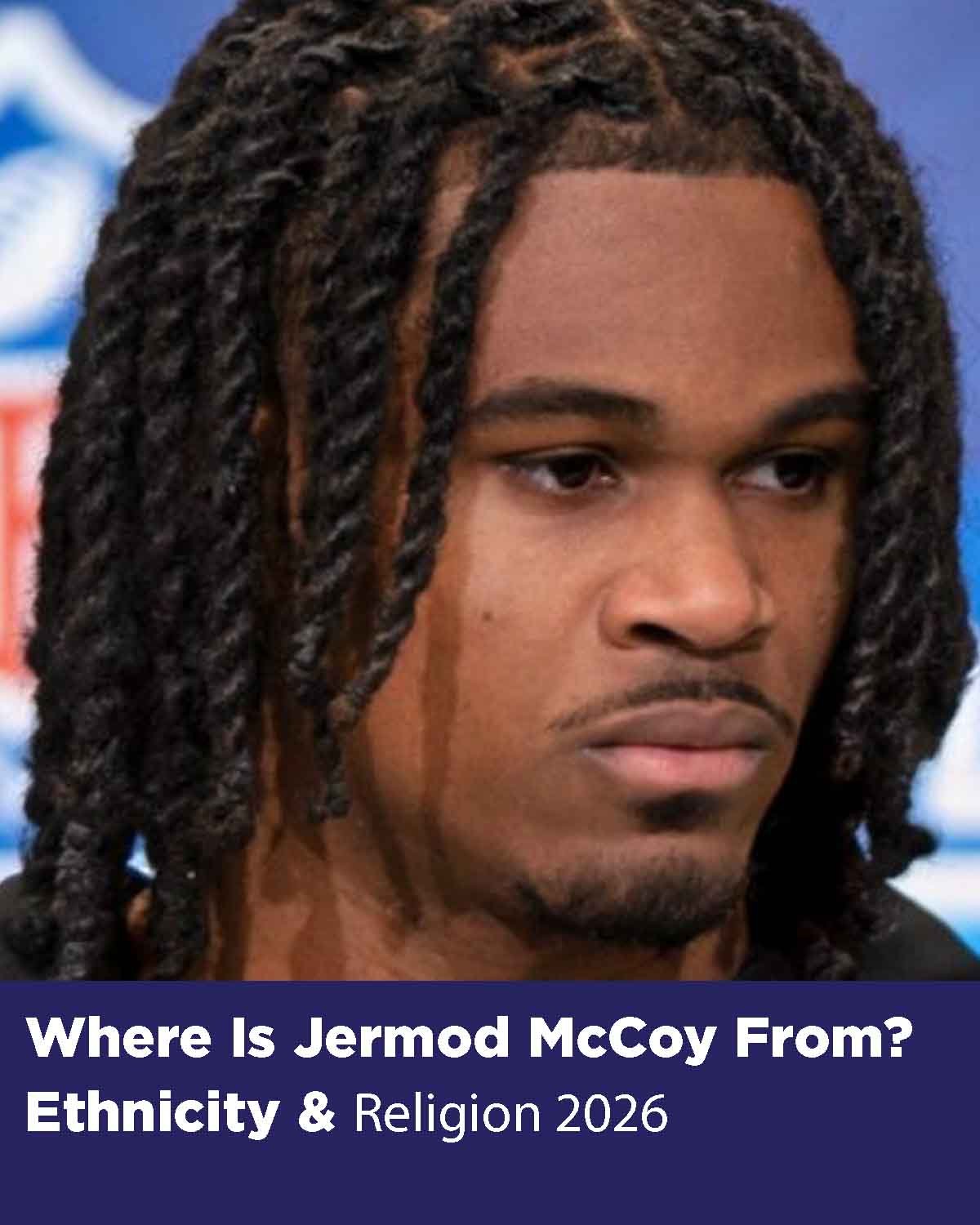
Where is Jermod McCoy from? Ethnicity & Religion 2026
📋 Table of Contents
- Introduction — Who Is Jermod McCoy?
- Jermod McCoy Ethnicity & Where He Is From
- Jermod McCoy’s Parents — Jason McCoy & Kanesha Brown
- Early Life — Whitehouse, Texas & Multi-Sport Background
- College Career — Oregon State to Tennessee Volunteers
- Scouting Report — What Makes McCoy an NFL Prospect?
- ACL Injury & Draft Stock Impact
- NFL Draft Outlook — Detroit Lions & Beyond
- FAQs on Jermod McCoy
- Conclusion
🏈 Quick Facts — Jermod McCoy
Full NameJermod McCoy
PositionCornerback (CB)
CollegeTennessee Volunteers (via Oregon State)
HometownWhitehouse, Texas
FatherJason McCoy
MotherKanesha Brown
EthnicityNot Publicly Specified
Other SportsBaseball, Triple Jump, Long Jump
Starting Year at UT2024
InjuryACL — Missed 2025 Season
Draft StatusDeclared for NFL Draft
NFL InterestDetroit Lions — Pick No. 17 Possibility
Introduction
Who Is Jermod McCoy? The Tennessee Volunteers CB Drawing Serious NFL Draft Attention
Jermod McCoy is a cornerback out of the Tennessee Volunteers program who has emerged as one of the more intriguing prospects in the 2026 NFL Draft cycle — a toolsy, athletically gifted outside corner whose natural movement skills, track and field background, and elite physical tools have drawn significant scouting attention despite a torn ACL that prematurely ended his 2025 season. His story is one of a multi-sport athlete from East Texas who found his way to two Power Five programs, earned a starting role at one of college football’s most storied institutions, and is now facing the most important evaluation of his life with scouts watching his recovery as closely as his tape.
McCoy grew up in Whitehouse, Texas — a small city in Smith County in East Texas — where he balanced football and baseball before eventually committing to a collegiate football career that would take him from Oregon State on the West Coast to Knoxville, Tennessee, and ultimately to the threshold of the NFL. His journey has not been linear, and his draft stock carries the complexity that always accompanies elite physical talent paired with injury uncertainty. But the consensus among evaluators is clear: when healthy, Jermod McCoy has the tools to be a legitimate NFL cornerback.
CB
Position — Cornerback
Texas
Whitehouse, TX Roots
Track
Triple & Long Jump Background
ACL
2025 Season-Ending Injury
Ethnicity & Background
Jermod McCoy Ethnicity — What We Know About His Roots & Heritage
Jermod McCoy’s specific ethnic heritage has not been officially confirmed or detailed in publicly available records or in any statement made by McCoy himself. According to available information, details about his precise ethnic background are not specified in the records that have been reviewed. This is not unusual for collegiate and NFL draft prospects, many of whom have not made public statements about their ethnic or cultural identity and for whom that information has not been independently verified through official biographical sources.
What is known about McCoy’s background is rooted in his East Texas upbringing. He was raised in Whitehouse, Texas — a community in Smith County in the East Texas region, an area with a demographically diverse population and a rich tradition of producing multi-sport athletes who go on to compete at the collegiate and professional levels. East Texas has its own distinct cultural identity — shaped by Southern traditions, strong athletic programs, and close-knit community structures that tend to produce athletes with a grounded work ethic and strong family foundations.
📍 Whitehouse, Texas — McCoy’s Hometown: Whitehouse is a city of approximately 10,000 people in Smith County, East Texas — part of the Tyler metropolitan area. Known for its strong high school athletic programs and competitive sports culture, Whitehouse has produced multiple college athletes across football, baseball, and track and field. McCoy’s multi-sport career there reflects the community’s broad athletic emphasis rather than early specialization in a single sport.
While his specific ethnic background remains unspecified in available records, McCoy’s identity as a Texas-raised, multi-sport athlete who earned his way to two Power Five college programs through exceptional athleticism and competitive drive speaks clearly to the character and work ethic that define who he is — qualities that are more meaningful to scouts and evaluators than any biographical category. His parents, Jason McCoy and Kanesha Brown, are publicly listed in records as having provided the family support that enabled his development — and their presence as a grounding influence across his football, baseball, and track careers reflects a family foundation that scouts consistently cite as a positive factor in player evaluations.
Family
Jermod McCoy’s Parents — Jason McCoy & Kanesha Brown
Public records list Jermod McCoy’s parents as Jason McCoy and Kanesha Brown — two individuals who are credited in available biographical information with having supported Jermod’s athletic development from his earliest years in Whitehouse, Texas. While neither Jason McCoy nor Kanesha Brown has been the subject of independent media coverage or made public statements about their son’s career, their presence as a supportive family unit is noted consistently in the background information available about McCoy’s upbringing.
In the world of college football recruiting and NFL draft evaluation, family background is a factor that scouts and team personnel departments take seriously — not as a biographical curiosity but as a genuine indicator of a player’s support system, stability, and the values that have been modeled for them across their development. A player who has had consistent, engaged, supportive parents across a multi-sport career that spanned football, baseball, and track and field in a small Texas city has had the kind of grounding that translates to coachability, work ethic, and the mental resilience required to bounce back from a serious injury.
“He was raised in Whitehouse, Texas, where he balanced football and baseball. Public records list his parents as Jason McCoy and Kanesha Brown, who supported his development.”
— Jermod McCoy Background Profile, April 2026
The fact that McCoy successfully balanced multiple sports across his formative years — playing football and baseball competitively while also competing in track and field events like the triple jump and long jump — reflects a family environment that valued broad athletic development over early specialization. That kind of multi-sport background is increasingly recognized by NFL evaluators as a positive indicator, as it produces athletes with more diverse movement patterns, better body awareness, and a more flexible competitive psychology than single-sport specialization tends to develop.
Early Life
Jermod McCoy Early Life — Whitehouse, Texas, Baseball, Football & Track
Jermod McCoy grew up in Whitehouse, Texas — a small city in East Texas’s Smith County that sits within the Tyler metropolitan area and is home to a high school athletic program that has produced a consistent stream of college-level competitors across multiple sports. His early athletic career was defined not by specialization but by versatility — a multi-sport approach that would ultimately prove to be one of the most valuable aspects of his athletic development.
He competed in both football and baseball during his high school years — a combination that reflects the particular athletic culture of East Texas, where football dominates but other sports maintain their own competitive traditions and produce athletes who benefit from the complementary physical demands of different games. His baseball background developed hand-eye coordination, tracking ability, and the spatial awareness that translates directly to ball skills as a cornerback. His football career developed the positional instincts, competitive toughness, and team-oriented mindset that coaches look for in defensive backs.
🏃 Track & Field — The Secret Weapon in McCoy’s Athletic Development: Beyond football and baseball, McCoy’s background as a triple jumper and long jumper in track and field has been specifically noted by NFL evaluators as a significant contributor to the physical tools that make him an intriguing prospect. Triple and long jumping develops explosive lower-body power, precise foot strike mechanics, and the kind of kinetic chain efficiency that manifests in football as quick-twitch acceleration, explosive change of direction, and elite vertical contest ability in coverage — all qualities that scouts see in McCoy’s film.
It is his track and field background — specifically his experience as a triple and long jumper — that has received the most attention from analysts evaluating his NFL potential. The explosive lower-body strength, the precise footwork, and the body control required to compete in the jumping events are directly transferable to the cornerback position, where smooth hips, fluid transitions, and the ability to explode into and out of breaks are the defining physical qualities that separate good corners from great ones. McCoy’s jumping background gave him a physical foundation that many corners who specialize in football from a young age simply do not develop in the same way.
College Career
College Career — From Oregon State to Tennessee Volunteers & a Starting Role
Jermod McCoy’s college career began at Oregon State University, where he developed his game in the Pac-12 before making the decision to enter the transfer portal and pursue an opportunity at a program with a higher national profile. His choice of Tennessee — one of the SEC’s most storied programs and a school that has become increasingly competitive under its current coaching staff — reflected both ambition and a desire to test himself at a higher level of competition before declaring for the NFL Draft.
At Tennessee, McCoy earned a starting role in 2024 — a significant achievement at a program where the cornerback position is a point of pride and where competition for starting spots is genuinely fierce. His ability to earn a starting role in the SEC — the most competitive conference in college football for defensive backs — against the receivers that populate SEC rosters is the most meaningful evaluative data point in his pre-injury portfolio. It demonstrated that his tools were not just physical projections but functional realities at a high level of competition.
Transfer Journey — Oregon State to Tennessee Volunteers
“McCoy began at Oregon State before transferring to Tennessee, earning a starting role in 2024 — demonstrating that his physical tools were functional realities at a high level of SEC competition, not just physical projections from scouts watching his jumping events on a track.”
— Jermod McCoy College Career Profile, April 2026
Also Read — Trending Story 2026
What Happened to Ashlee Jenae’s Fiancé? — Arrested Rumors 2026 | Full Story & Update
One of 2026’s most-searched stories involves Ashlee Jenae’s fiancé and the arrested rumors circulating across social media. What actually happened? Are the arrest reports accurate, or is this another case of viral misinformation spreading faster than the facts? This full investigation separates rumour from confirmed reality, breaks down what authorities and the couple have said, and gives you the complete, accurate picture of what is actually going on. Read the full story and latest update.
Read Full Story →
Scouting Report
Scouting Report — What Makes Jermod McCoy an Intriguing NFL Cornerback Prospect?
The scouting consensus on Jermod McCoy is built around a collection of physical and athletic traits that are genuinely rare at the cornerback position — tools that, when operating at full health, project clearly to a functional role at the next level. The key attributes that evaluators consistently highlight are his smooth hips, his fluid hip transitions, his ball skills, and the explosive lower-body power that his track and field background has developed into one of his primary competitive advantages.
His smooth hips — the ability to change direction fluidly without stiffness or hesitation — are the most foundational physical quality for a man cornerback. Hips that are naturally loose and flexible, that can open and close quickly in response to a receiver’s route, are something that coaching can refine but cannot create from scratch. McCoy has them naturally. Combined with his fluid transitions — the ability to shift from backpedal to break or from open-hipped trail position to contested-catch position without losing balance or wasting movement — his natural coverage movement is among the cleaner technique profiles in this draft class for the position.
“NFL Network’s Daniel Jeremiah called McCoy a top-10 talent, praising his explosive play and impact ability despite a torn ACL that ended his 2025 season.”
— NFL Network Draft Analysis, April 2026
His quick feet — another direct product of his jumping background — aid his recovery when he gets beat in coverage, allowing him to close ground on receivers more efficiently than corners with heavier lower-body mechanics. His ball skills — the ability to locate and contest the football in the air — are similarly tied to his track background, where attacking an object at its highest point is a fundamental technical skill developed over years of competition. The areas of concern are primarily related to his acceleration, which scouts note can limit his effectiveness in vertical coverage, and his consistency, which the ACL injury has interrupted before it could be fully established at the SEC level.
Injury & Recovery
ACL Injury — How a Torn Knee Ligament Reshaped McCoy’s Draft Timeline
The most significant challenge to Jermod McCoy’s NFL draft stock is not his athleticism, not his technique, and not his pedigree — it is the torn ACL that ended his 2025 season before it could provide the sustained, high-level tape that NFL teams ideally want to see from a first-round cornerback candidate. The injury paused his development at a critical moment: just as he was establishing himself as a starter in the SEC and beginning to generate the kind of consistent game-to-game tape that moves prospects up draft boards, his season was over.
ACL injuries in football are no longer the career-ending events they once were — modern surgical and rehabilitation techniques have made full recovery a realistic expectation for most athletes who suffer the injury. But they do introduce legitimate uncertainty into the evaluation process, particularly around the timeline of recovery, the degree to which a player regains their pre-injury explosiveness and cutting ability, and the longer-term durability implications for a position that places extreme demands on the knee across the course of a professional career.
🏥 ACL Recovery Context: For cornerbacks, an ACL injury carries particular significance because the position demands explosive lateral movement, sudden direction changes, and the kind of stop-start acceleration that places maximum stress on the anterior cruciate ligament. McCoy’s recovery status and his movement patterns during pre-draft workouts will be among the most closely scrutinized factors in how teams ultimately evaluate where his injury risk sits relative to his physical upside — and where that balance places him in their draft boards.
NFL teams with early picks will be weighing two competing realities in their evaluation of McCoy: the genuine elite-level physical tools that Daniel Jeremiah of NFL Network described as top-10 talent, and the uncertainty introduced by a serious knee injury suffered before he could produce a full season of SEC-level starting film. That tension — between documented upside and legitimate health concern — is what makes McCoy one of the most genuinely interesting and genuinely debated prospects in the 2026 draft cycle.
NFL Draft Outlook
NFL Draft Outlook — Detroit Lions at Pick No. 17 & the Case for McCoy Early
The most specific and high-profile draft projection linking Jermod McCoy to a particular team and pick is the scenario placing him with the Detroit Lions at pick No. 17 — a scenario that has been discussed by analysts who see the Lions as a team willing to take calculated risks on elite physical talent when other teams’ injury concerns create value at a position need. Detroit’s precedent with Jameson Williams — a wide receiver they selected in the first round while he was recovering from a torn ACL, who has since established himself as a legitimate weapon — is frequently cited as evidence that the Lions organization has the patience, the medical evaluation process, and the coaching structure to maximize a talented player who arrives with injury asterisks.
The Lions have clear needs on both the offensive and defensive lines, and taking a cornerback at 17 when offensive tackle and edge rusher options may be available would represent a departure from what might be considered their most urgent positional needs. But the argument for McCoy at that position in the draft — if Detroit’s medical staff clears him and their evaluators believe in the top-10 physical talent — is that elite cornerback prospects with his movement profile do not come available in the mid-to-late rounds, and that a team with Super Bowl aspirations needs to acquire difference-making talent whenever it presents itself, regardless of the positional rank in that particular draft cycle.
NFL Network — Daniel Jeremiah Draft Assessment
“NFL Network’s Daniel Jeremiah called McCoy a top-10 talent, praising his explosive play and impact ability despite a torn ACL that ended his 2025 season — a high-profile endorsement from one of the draft’s most respected analysts.”
— NFL Network Draft Coverage, April 2026
Also Read — Trending 2026
What Happened to Ashlee Jenae’s Fiancé? — Arrested Rumors 2026
The viral arrested rumors surrounding Ashlee Jenae’s fiancé have been circulating widely in 2026. Get the full, accurate story — what happened, what’s confirmed, and what’s misinformation.
Read Full Story →
Also Read — Athlete Profile 2026
Who Is Brandon Cisse? — Ethnicity & Religion 2026
A complete 2026 profile of Brandon Cisse’s ethnicity, religion, nationality, and personal background — exploring the cultural identity and heritage of one of football’s notable young names.
Read Full Profile →
FAQs
FAQs on Jermod McCoy — Tennessee Volunteers CB
What traits attract evaluators to Jermod McCoy?
Analysts specifically highlight his natural coverage movement, flexible lower-body control, smooth hip transitions, and ability to adjust in space — physical qualities derived in part from his triple and long jumping background in track and field. His ball skills and quick feet are consistently rated as among the stronger traits in his cornerback profile.
How did earlier sports help develop McCoy’s football skill set?
His track and field jumping experience — specifically triple jump and long jump — built explosive lower-body power, precise foot mechanics, and exceptional contest ability when attacking the ball in the air. His baseball background contributed to hand-eye coordination and the spatial tracking skills that translate to ball skills in coverage.
What has slowed McCoy’s progress?
A torn ACL suffered during the 2025 season ended his year prematurely and raised durability questions in the NFL Draft evaluation process. The injury interrupted what had been a promising start to his Tennessee career and prevented him from building the sustained, game-to-game SEC tape that first-round cornerback prospects typically need to fully validate their scouting profiles.
What is known about McCoy’s background?
He was raised in Whitehouse, Texas, with family support from his parents Jason McCoy and Kanesha Brown. He competed in football, baseball, and track and field — triple jump and long jump — during his formative years. His specific ethnic heritage has not been officially confirmed in available public records.
Why is Jermod McCoy linked to NFL interest?
Teams view him as a high-upside defender whose physical tools — smooth hips, fluid transitions, explosive lower-body power, ball skills — project clearly to a functional NFL cornerback role. NFL Network’s Daniel Jeremiah described him as a top-10 talent. The Detroit Lions are specifically linked to him at pick No. 17, given their history of drafting injured talent with elite physical profiles.
Conclusion
Conclusion — Jermod McCoy’s Story Is One of Raw Talent, Multi-Sport Roots & a Draft Moment of Truth
Jermod McCoy’s path to the 2026 NFL Draft is the story of a kid from Whitehouse, Texas who was too athletic to play just one sport, who took the lessons of the triple jump and the baseball diamond onto the football field, who earned his way through two Power Five programs, earned a starting role in the SEC, and then had his development interrupted by an injury that has made his draft moment one of the most fascinating high-stakes evaluations in this cycle. The physical tools are real. The character foundation — built in East Texas with the support of his parents Jason McCoy and Kanesha Brown — is real. What NFL teams are evaluating right now is whether the knee is real enough, and healed enough, to justify the pick it will take to acquire him.
His specific ethnic background remains undetailed in available records — a fact that has no bearing on the football player he is or the prospect he represents. What defines Jermod McCoy as a person and as a player is where he comes from — Whitehouse, Texas — and how he got here: through multi-sport dedication, through two college programs, through a torn ACL that would have ended lesser athletes’ draft dreams, and through the kind of physical gifts that make NFL Network analysts call you a top-10 talent even when you are still recovering from surgery. That is the Jermod McCoy story. And the next chapter — wherever he lands on draft night — is one that the football world will be watching closely.
Also Read — Athlete Profile 2026
Who Is Brandon Cisse? — Ethnicity & Religion 2026 | Background, Heritage & Faith Explained
Curious about the ethnic backgrounds and cultural identities of football’s rising names in 2026? Brandon Cisse’s ethnicity, religion, nationality, and personal heritage are covered in full in this dedicated 2026 profile — exploring where he comes from, what faith he follows, and how his cultural background connects to who he is as a player and a person. Just as with Jermod McCoy, understanding the personal story behind an athlete adds important depth to how we appreciate their journey. Read the complete Brandon Cisse ethnicity and religion profile.
Read Full Profile →
What Happened to Ashlee Jenae’s Fiancé? Arrested Rumors 2026

📋 Table of Contents
- What Happened to Ashlee Jenae? — Full Story
- Who Is Ashlee Jenae? — Background & Profile
- Full Timeline of Events — April 2026
- Joe McCann Arrested — What We Know
- Medical Report — Cause of Death & Strangulation Finding
- Family Response — Demanding Answers
- Investigation — Embassy, Coroner & Police
- FAQs — Everything You Need to Know
- Conclusion
⚡ Quick Facts — Ashlee Jenae Case
Real NameAshly Robinson
Online NameAshlee Jenae (@ashleejenae)
Age at Death31 years old
HometownWoolwich, New Jersey (lived in Miami)
Instagram Followers119,000+
BirthdayApril 5, 2026 (celebrated in Tanzania)
Date of DeathApril 9, 2026
Location of DeathZuri Zanzibar Hotel, Zanzibar, Tanzania
FiancéJoseph Isaac McCann (Joe McCann), 48
Official CauseCerebral Hypoxia — Strangulation & Suffocation (2nd hospital report)
Breaking — April 2026
What Happened to Ashlee Jenae? — A Birthday Trip That Turned Tragic
What was meant to be the beginning of the next chapter of a young woman’s life has become one of the most shocking and widely followed international cases of 2026. Ashlee Jenae — real name Ashly Robinson, a 31-year-old lifestyle influencer from New Jersey who had built a following celebrating what she called her “soft life” — died on April 9, 2026 at the Zuri Zanzibar Hotel in Tanzania during what was supposed to be a dream birthday and engagement trip with her fiancé, Joseph Isaac McCann.
Her final Instagram post, published on her birthday — April 5 — showed her feeding a giraffe on a Tanzania safari, surrounded by rose petals that spelled “HBD Ashlee.” The caption read: “Chapter 31 and I’m exactly where I need to be.” Four days later, she was dead. Her family is demanding answers. Her fiancé has been detained and his passport seized. The medical report from the second hospital where she was treated lists her cause of death not as suicide — as McCann told authorities — but as cerebral hypoxia caused by strangulation and suffocation.
The case has drawn international attention, sparked widespread calls for justice across social media, and placed both Tanzanian and American authorities under pressure to deliver transparent answers to a grieving family and a watching world.
⚠️ Editorial Note: This article reports only confirmed facts from official sources, major media outlets (ABC News, HuffPost, 6ABC, BBC, NBC), and family statements. Allegations circulating on social media that go beyond confirmed findings are noted as such. Joseph McCann has not been formally charged with a crime as of publication. The investigation is ongoing. All parties are presumed innocent unless proven otherwise in a court of law.
Profile
Who Is Ashlee Jenae? — The Woman Behind the Influencer
Ashly Robinson, known online as Ashlee Jenae, was a 31-year-old lifestyle influencer originally from Woolwich, New Jersey, who had relocated to Miami, Florida. She built an Instagram following of over 119,000 followers under the handle @ashleejenae, where she documented what she described as her “soft life divestor” journey — a philosophy of choosing joy, intentionality, and a life lived fully on one’s own terms.
Her content was aspirational, warm, and deeply personal. She shared travel adventures, lifestyle updates, and moments with her partner. Her followers knew her as someone genuinely committed to living life as beautifully and fully as possible — which is precisely why the news of her death under the circumstances now under investigation has hit her community so hard.
“Chapter 31 and I’m exactly where I need to be.”
— Ashlee Jenae’s final Instagram post, April 5, 2026 — her birthday
She had been dating Joseph Isaac McCann — also known as Joe McCann or Jon McCann — for approximately a year. McCann is described as the founder of Asymmetric Financial, a cryptocurrency and financial services firm based in the United States. He was 48 years old at the time of the events in Tanzania. On April 5, Ashlee’s birthday, McCann proposed to her during the Tanzania safari trip. The proposal was captured on video and shared on Instagram. Days later, she was gone.
Also Read — People & Profiles 2026
Who is Brandon Cisse? Ethnicity & Religion 2026
As communities rally around Ashlee Jenae’s family seeking answers, read more profiles of notable individuals making headlines in 2026 — including a full breakdown of Brandon Cisse’s ethnicity, religion, and background.
Timeline of Events
Full Timeline of Events — What Happened in Zanzibar, Tanzania
Based on confirmed reports from ABC News, 6ABC WPVI, BBC, HuffPost, and official Tanzanian police statements, here is the verified timeline of events surrounding Ashlee Jenae’s death:
April 4, 2026
Ashlee Jenae (Ashly Robinson) and Joe McCann check into the Zuri Zanzibar Hotel in Zanzibar, Tanzania. They had booked a seven-day stay, scheduled to check out April 10. The trip was planned to celebrate Ashlee’s 31st birthday and their relationship.
April 5, 2026 — Birthday & Proposal
Ashlee celebrates her 31st birthday in Tanzania. McCann proposes to her during a safari excursion. The proposal is captured on video and shared on Instagram. Ashlee posts a montage of birthday photos and captions it: “Chapter 31 and I’m exactly where I need to be.” This is her final Instagram post.
April 8, 2026 — Argument & Separation
A heated argument breaks out between Ashlee and McCann at the hotel. Other hotel guests alert staff to what is described as a “romantic conflict”. Hotel staff intervene and separate the couple — moving McCann to a different villa approximately 8–10 minutes walking distance from Ashlee’s room. Ashlee calls her mother to tell her about the argument and the room separation. Hotel staff check on Ashlee — she asks for a phone charger and tells the attendant to return in 15 minutes.
April 8–9, 2026 — Found Unresponsive
When hotel staff return, Ashlee’s room is locked with the lights off. Using a spare key, the attendant enters and finds Ashlee unresponsive. She is rushed to a local hospital, then transferred to a second hospital. She is still breathing when untied but dies two to three hours later. She is declared dead on April 9, 2026.
April 9, 2026 — Family Notification
McCann calls Ashlee’s mother, Yolanda Denise Endres, to tell her Ashlee had been hospitalized. “He told me that Ashly did something to herself and she was being taken to the hospital, and he told me she was stable,” Endres told ABC News. Hours later, the hotel contacts the family to confirm Ashlee’s death.
April 12, 2026 — Family Statement
Ashlee’s family releases a public statement: “Nothing about this loss feels real… The suddenness, the unanswered questions, and the distance from home have made this tragedy even more overwhelming… there is an active investigation into the circumstances surrounding Ashlee’s suspicious passing.”
April 13–15, 2026 — Fiancé Detained
Tanzanian authorities detain Joe McCann for questioning and confiscate his passport. He is held at the Zanzibar police station while detectives investigate. The US Embassy in Dar es Salaam grants authority for an American coroner representative, coordinating with Ashlee’s brother, to oversee the autopsy at Lumumba Government Hospital.
Suspect — Joe McCann
Joe McCann Detained — Passport Seized, Questioned by Detectives
Tanzanian authorities confirmed that Joseph Isaac McCann, 48 — Ashlee Jenae’s fiancé — has been detained in Zanzibar and his passport confiscated while police investigate the circumstances of her death. Zanzibar deputy police commissioner Zuberi Chembela confirmed to ABC News that McCann is still being questioned by detectives and that the investigation is ongoing.
🔍 Official Police Statement — Tanzanian Authorities
“This partner of the deceased, we have detained for further questioning. We want to know what happened there. He is being questioned by detectives. The investigation is being done in coordination with the deceased’s brother. They have sent a representative from a special institution that handles death investigations (Coroner), which has received authority from the U.S. Embassy in Dar es Salaam, Tanzania. We have seen the letter, and a copy has been delivered to Lumumba Government Hospital to grant the authority given by the deceased’s family for this institution to oversee the autopsy and investigation.”
The official added: “Therefore, I ask that we remain calm and trust the accurate information provided by the relevant security agencies. Once the full details regarding the death of this visitor are available, we will release them.”
The official added: “Therefore, I ask that we remain calm and trust the accurate information provided by the relevant security agencies. Once the full details regarding the death of this visitor are available, we will release them.”
McCann told Tanzanian authorities that Ashlee died by suicide — specifically by hanging. He stated he found her after she had hanged herself on the door. However, multiple developments have placed serious doubt on this account. Local police initially said McCann was not a suspect, then later detained him for questioning — a shift that reflects the evolving nature of the investigation as new evidence emerged.
Notably, after news of Ashlee’s death broke, McCann’s activity on his X (formerly Twitter) account raised eyebrows online: he was found to have posted about an AI success story and a Thailand business client on April 8, 2026 — the same period when, by his own account, his recently engaged partner was hospitalized and dying. Many online observers found this deeply troubling, though McCann has not addressed it publicly.
⚖️ Legal Note: Joseph Isaac McCann has not been formally charged with any crime as of the publication of this article. He is currently being held for questioning as part of an ongoing investigation. The legal presumption of innocence applies. Confirmed facts only are reported here — social media allegations that go beyond confirmed findings are not reported as fact.
Medical Evidence
Medical Report — Cause of Death Listed as Strangulation & Suffocation
One of the most significant developments in the Ashlee Jenae case is the medical report from the second hospital to which she was transferred after the incident. The report, obtained by ABC News, directly contradicts the suicide narrative that McCann presented to authorities.
According to the medical report from the second hospital, Ashlee’s cause of death was listed as cerebral hypoxia — a lack of oxygen to the brain — caused by strangulation and suffocation. Additionally, a hospital medical report noted an unidentified mark around her neck.
“Robinson was later taken to a second hospital, which listed her cause of death as cerebral hypoxia by strangulation and suffocation.”
— ABC News / HuffPost, citing official hospital report
The distinction between the two hospital reports is significant. The first report — from the initial facility where McCann reportedly told staff she had hanged herself — describes the mechanism of death consistent with his account. The second, more detailed medical report uses the clinical language of strangulation and suffocation, which carries different legal implications and is inconsistent with a self-inflicted hanging death.
Ashlee’s family has also requested surveillance footage from the Zuri Zanzibar resort to support the investigation. As of this report, that footage has not been publicly released or confirmed as received by the family. The full autopsy and toxicology results remain pending.
Also Read — Notable Stories 2026
Who Is Alysa Liu’s Mother? The Surrogacy Story She Figured Out at Age 8 — Full Explainer 2026
As Ashlee Jenae’s family fights for answers and justice in Tanzania, other compelling family stories are making news in 2026. Read the full explainer on figure skater Alysa Liu’s remarkable surrogacy story — one of the most talked-about personal narratives of the year.
Family
Ashlee Jenae’s Family — Demanding Truth & Refusing to Be Silenced
The Robinson family — Ashlee’s parents Harry Robinson and Yolanda Denise Endres — have been the most vocal and determined force in pushing for answers. They have refused to accept the suicide narrative and have been publicly transparent about their lack of information from both Tanzanian authorities and McCann himself.
“There is nothing that is confirmed. We don’t have anything from the police or law enforcement that states there is a conclusion to anything. It’s under investigation, and it’s under investigation because it doesn’t look right.”
— Yolanda Denise Endres, Ashlee’s mother, to 6ABC Philadelphia
“We’re here, helpless. We’re here helpless.”
— Harry Robinson, Ashlee’s father, to 6ABC Philadelphia
The family traveled to Washington, D.C. to seek information from the US Embassy after receiving inadequate responses from both Tanzanian police and McCann. They have explicitly stated that McCann has not given them clear information about what happened to their daughter. Her mother has said, with absolute conviction: “She’s never done anything that would ever ever lead me to believe that she would do something to harm herself like that. She was happy.”
The family made clear their intentions in their April 12 public statement: “She was loved. She was not just going to be discarded and forgotten about.” They have expressed trust in the ongoing investigation while simultaneously making it clear that they will not stop pushing for transparency until they have the full truth about what happened to their daughter in that hotel room in Zanzibar.
💜 Close Friend Savannah Britt: Ashlee’s close friend Savannah Britt has publicly disputed the suicide narrative and shared the ABC News medical report with her audience, calling out what she believes are serious inconsistencies in McCann’s account. Her advocacy has been part of why this case has gained such wide international attention and public pressure.
Investigation
The Investigation — Tanzania, the US Embassy & the Coroner’s Authority
The investigation into Ashlee Jenae’s death is a coordinated international effort involving Tanzanian police, the Zanzibar authorities, the US Embassy in Dar es Salaam, and a specially authorized American coroner’s representative working on behalf of the Robinson family.
The US Embassy in Dar es Salaam has confirmed an American citizen died in Zanzibar. The family’s representative — from a specialized institution that handles death investigations — has been granted formal authority from the embassy to oversee the autopsy investigation at Lumumba Government Hospital. Tanzanian authorities have confirmed receiving and acting upon this authority letter. Ashlee’s brother has been coordinating directly with the investigation.
The Zuri Zanzibar resort issued a statement confirming they are “deeply saddened by a tragic incident involving one of our guests” and that they are cooperating fully with local authorities and the US Embassy. The resort has not addressed the family’s request for surveillance footage publicly.
The full autopsy, toxicology results, and any additional forensic findings from the scene are expected to be the determining evidence in this case. Until those results are released, the cause of death remains officially under investigation — and the pressure from the family, the public, and the international media community continues to mount.
Frequently Asked Questions
FAQs — Ashlee Jenae: Everything You Need to Know
What is Ashlee Jenae’s real name? ▼
Her real name is Ashly Robinson. She was known online as Ashlee Jenae on Instagram, where she had over 119,000 followers. She was originally from Woolwich, New Jersey, and had relocated to Miami, Florida.
How did Ashlee Jenae die? ▼
Ashlee was found unresponsive in her room at the Zuri Zanzibar Hotel on the night of April 8, 2026, and was declared dead on April 9. The medical report from the second hospital where she was treated lists the cause of death as cerebral hypoxia by strangulation and suffocation. Her fiancé Joe McCann told authorities she died by suicide. The full investigation is ongoing.
Who is Joe McCann — Ashlee’s fiancé? ▼
Joe McCann’s full name is Joseph Isaac McCann, 48 years old. He is described as the founder of Asymmetric Financial, a US-based cryptocurrency and financial services company. He proposed to Ashlee on her birthday, April 5, 2026. He has been detained by Tanzanian authorities and his passport confiscated as part of the ongoing investigation. He has not been charged with a crime.
Has Joe McCann been charged with a crime? ▼
As of the publication of this article, Joe McCann has not been formally charged with any crime. He is being held for questioning by Tanzanian detectives, and his passport has been confiscated. He is cooperating with the investigation as a person being questioned — not as a formally charged suspect. The investigation remains ongoing.
What did the medical report find? ▼
The medical report from the second hospital where Ashlee was treated listed her cause of death as cerebral hypoxia — lack of oxygen to the brain — caused by strangulation and suffocation. A hospital report also noted an unidentified mark around her neck. This differs from the suicide narrative put forward by McCann and initially acknowledged by local police.
What is Ashlee’s family saying? ▼
Her parents, Harry Robinson and Yolanda Denise Endres, have publicly rejected the suicide narrative. Her mother said: “She’s never done anything that would ever ever lead me to believe that she would do something to harm herself.” The family has traveled to Washington D.C. seeking information from the US Embassy and is working with a coroner’s representative authorized by the embassy to oversee the autopsy investigation.
Where did this happen? ▼
The incident took place at the Zuri Zanzibar Hotel in Zanzibar, an island chain belonging to Tanzania in East Africa. The resort is described as a luxury property. The couple had checked in on April 4, 2026, and were booked for a seven-day stay.
Conclusion
Conclusion — A Family Demands Justice for Ashlee Jenae
Ashlee Jenae was 31 years old. She went to Zanzibar to celebrate her birthday and her engagement — to live the “soft life” she had built her entire platform around sharing with over a hundred thousand followers. She posted a photo of herself feeding a giraffe and called it “Chapter 31.” Four days later, she was dead under circumstances that her family, her friends, and the medical evidence are placing serious questions around.
The investigation is ongoing. The autopsy results are pending. Joe McCann is being questioned and his passport is held. The US Embassy, a coroner’s representative, Tanzanian police, and Ashlee’s family are all involved in a coordinated effort to find out what actually happened in that hotel room on the night of April 8, 2026.
Her parents said it simply and completely: “She was loved. She was not just going to be discarded and forgotten about.” The world is listening. And the world is waiting for the truth.
In Memory of Ashlee Jenae — Ashly Robinson
“Chapter 31 and I’m exactly where I need to be.” — Her last words to the world. She deserved Chapter 32, and every chapter after that. May the truth come to light, and may justice follow.
Rest in Peace — Ashlee Jenae · Ashly Robinson · April 5, 1995 – April 9, 2026
💜 Leave a Message for Ashlee’s Family
Share your condolences, support, and love for Ashlee Jenae and the Robinson family as they seek truth and justice. Every message of solidarity matters.✅ Thank you. Your message has been received. The Robinson family is grateful for every message of love and solidarity. #JusticeForAshleeJenae 💜
Who Is Alysa Liu’s Mother? The Surrogacy Story She Figured Out at Age 8 — Full Explainer 2026

📋 Table of Contents
- Key Takeaways
- Alysa Liu Profile Summary
- What Exactly Is Alysa Liu’s Surrogacy Story?
- When Did Alysa Liu Figure Out the Surrogacy Story?
- Full Timeline of Events — Alysa Liu’s Family Background
- Recent Statements & Career Updates
- Alysa Liu’s Response & Family Perspective
- Arthur Liu’s Remarkable Journey to Single Parenthood
- Rumours vs Facts — Clearing Up Misinformation About Alysa’s Background
- FAQs
- Wrapping Up
📋 Profile Summary — Alysa Liu
Full NameAlysa Liu
Date of Birth8 August 2005
Age20 Years Old (as of April 2026)
Place of BirthClovis, California, USA
NationalityAmerican
EthnicityMixed (Chinese & Caucasian)
ReligionChristianity
Biological MotherAnonymous Egg Donor (Identity Unknown)
FatherArthur Liu
Step-MotherYan Qingxin “Mary”
SiblingsSelena, Julia, Justin & Joshua
OccupationFigure Skater
High SchoolCalifornia Connections Academy
CollegeUCLA — Psychology Major
Key Takeaways
Key Takeaways — What We Know About Alysa Liu’s Mother and the Surrogacy Story
⚡ Essential Facts — 2026
- Alysa Liu’s biological mother has never been publicly identified — she was born via surrogacy using an anonymous egg donor, a fact her father Arthur Liu has openly discussed.
- Arthur Liu deliberately chose Caucasian egg donors for Alysa and her siblings, believing a diverse gene pool would benefit them — a decision Alysa herself has reflected on publicly.
- Alysa and the triplets share the same surrogate mother, whom Alysa has reportedly met in person, though the surrogate’s identity has not been publicly disclosed.
- Alysa pieced together the truth about her surrogacy origins at approximately age 8, after noticing she did not look fully Chinese despite having a Chinese father.
- Yan Qingxin “Mary,” Arthur Liu’s then-wife, took on the legal guardian role for Alysa and her siblings — a role she continued even after her divorce from Arthur.
- Arthur Liu’s mother, Shu, relocated from China to California to help raise the family during their first eight years, with the entire household sharing a one-bedroom flat.
Background
Who Is Alysa Liu? — The Figure Skater Behind the Headlines
Alysa Liu is one of American figure skating’s most gifted and decorated young athletes — a competitor who made history by becoming the first woman to land a quad Lutz in competition and who has brought both technical brilliance and magnetic charisma to the ice since she first burst onto the scene in her early teenage years. Born on 8 August 2005 in Clovis, California, and raised in Oakland, she has spent most of her young life in rinks, competition halls, and — more recently — university lecture halls, having enrolled at UCLA to study psychology.
Off the ice, however, Alysa is also a figure whose personal story has attracted significant public curiosity — particularly around the nature of her family background, the identity of her biological mother, and the remarkable circumstances under which she and her four younger siblings came into the world. Her father, Arthur Liu, is a Chinese dissident attorney who fled China following the Tiananmen Square crackdown in 1989 and who made the unconventional and deeply personal decision to build his family as a single parent through surrogacy with anonymous egg donors. That story — and Alysa’s own discovery of it at age 8 — is one that she has begun to share publicly with growing candor.
⛸️ Alysa Liu’s Skating Career: Alysa Liu became the youngest US figure skating champion in history when she won the title at age 13. Her technical prowess — including the first quad Lutz landed by a woman in competition — placed her among the sport’s elite at an age when most skaters are still developing. Her father Arthur introduced her to the sport at five years old, inspired by legends Michelle Kwan and Kristi Yamaguchi, and invested heavily in her training from the very beginning.
The Surrogacy Story
What Exactly Is Alysa Liu’s Surrogacy Story? — The Full Background Explained
Alysa Liu does not have a biological mother in the traditional sense — she was brought into the world through surrogacy, using an anonymous egg donor chosen by her father Arthur. That choice was deliberate, considered, and has been explained openly by Arthur himself: he selected Caucasian egg donors for his children because he believed a diverse genetic background would offer them advantages in life. He has also spoken at length about his decision to pursue single parenthood, having set a personal goal of becoming a father before the age of 40 — a goal he achieved through the surrogacy route.
Alysa is not the only child in the family born this way. Her younger sister Selena was also born via surrogacy with an anonymous donor, as were the triplets Julia, Justin, and Joshua. Notably, Alysa and the triplets share the same surrogate mother — a woman Alysa has reportedly met, though neither the surrogate’s identity nor the nature of that relationship has been shared publicly. The egg donors, however, remain anonymous, meaning the biological maternal lineage of each child is formally unknown and, by design, unreachable.
Alysa Liu — Rolling Stone Interview, March 2026
“I realized I didn’t look fully Chinese — even though my dad is Chinese. That’s when I started putting things together, and eventually I figured it out.”
— Alysa Liu, conversation with writer Alex Morris, Rolling Stone YouTube, March 7, 2026The surrogate who carried Alysa and the triplets played a purely gestational role — she provided the womb, not the egg — meaning that while Alysa has had the opportunity to meet her, the woman is not her biological mother in a genetic sense. The egg donor, whose Caucasian heritage contributed to Alysa’s mixed appearance, remains anonymous. This distinction — between surrogate and egg donor — is one that became personally significant to Alysa as she grew older and began to understand the full picture of how she came into the world.
Discovery
When Did Alysa Liu Figure Out the Surrogacy Story? — The Age-8 Realisation
Alysa Liu was approximately eight years old when she began to piece together the truth about her origins — not through a formal conversation with her father, but through her own powers of observation. She noticed, with a child’s instinctive clarity, that she did not look fully Chinese despite having a Chinese father. That visual discrepancy planted a seed of curiosity that eventually led her to the full understanding of how she was born.
She recounted this moment of realisation in a conversation with Rolling Stone writer Alex Morris, published on YouTube on March 7, 2026 — describing the process of quietly working it out herself rather than being told outright. It is a remarkably self-possessed account from a young woman who clearly processed a complex personal discovery at a young age with intelligence and equanimity. The story also speaks to the particular experience of children born through surrogacy and donor conception, who often encounter their own origins not through a single dramatic revelation but through a gradual accumulation of questions, clues, and conversations.
🔍 Identity Context — 2026: Alysa Liu’s realisation at age 8 is consistent with research on donor-conceived children, who frequently develop curiosity about their biological origins during middle childhood. Arthur Liu has spoken openly about his choices — including his deliberate selection of Caucasian donors — acknowledging that questions of identity, appearance, and heritage were always part of the picture he was creating for his children.
Full Timeline
Full Timeline of Events — Alysa Liu’s Family Background & Personal Story
1989
Arthur Liu Flees China via Operation Yellowbird
Arthur Liu, then 25, escapes Guangzhou following the Tiananmen Square crackdown through Operation Yellowbird. He arrives in Oakland, California, and begins working as a busboy in Berkeley — the start of an extraordinary personal reinvention in America.
1990s – Early 2000s
Arthur Builds a Career & Decides to Start a Family Alone
Arthur earns an MBA from California State University, East Bay, and a J.D. from UC College of the Law, San Francisco, becoming an established attorney. He sets a personal goal of fatherhood before 40 and begins exploring surrogacy with anonymous egg donors as the route to building his family.
August 8, 2005
Alysa Liu Is Born in Clovis, California
Alysa is born via surrogacy with an anonymous Caucasian egg donor — the first of Arthur’s five children. Arthur’s mother, Shu, relocates from China to California to help raise the growing family, with all of them initially sharing a one-bedroom flat.
Mid-2000s
Selena & the Triplets Are Born
Alysa’s younger sister Selena is born via surrogacy, followed by triplets Julia, Justin, and Joshua. Alysa and the triplets share the same surrogate mother. All five children are raised by Arthur with support from his mother Shu and, later, from Yan Qingxin “Mary.”
Age 5 — circa 2010
Alysa Is Introduced to Figure Skating
Arthur introduces Alysa to figure skating at age five, inspired by his admiration for Michelle Kwan and Kristi Yamaguchi. He invests heavily in coaching, using a radar gun to measure her jump speed and dismissing coaches who do not meet his standards.
Age 8 — circa 2013
Alysa Pieces Together the Surrogacy Story
At approximately eight years old, Alysa notices she does not look fully Chinese despite her father’s heritage. She quietly works out the truth about her surrogacy origins through her own observation — a realisation she later describes in her own words in a Rolling Stone interview in 2026.
January 2019
Youngest-Ever US Figure Skating Champion
At age 13, Alysa becomes the youngest woman to win the US Figure Skating Championship — a historic achievement that cements her status as one of the sport’s most extraordinary young talents and brings national media attention to her and her family’s story.
2024 – 2025
Alysa Enrolls at UCLA & Continues Competing
Alysa enrolls at the University of California, Los Angeles, to study Psychology — continuing to balance elite athletic competition with academic life, and beginning to share more of her personal story in interviews and public appearances.
March 7, 2026
Alysa Opens Up in Rolling Stone Interview
In a conversation with writer Alex Morris published on Rolling Stone’s YouTube channel, Alysa describes figuring out the truth of her surrogacy origins at age 8 — bringing her family background into public focus and prompting widespread coverage of the story.
March 26, 2026
Alysa Appears at the iHeartRadio Music Awards
Alysa appears at and speaks onstage at the 2026 iHeartRadio Music Awards at Dolby Theatre in Hollywood, California — a visible sign of her growing profile beyond the skating world and her emergence as a broader public figure.
Recent Statements
Recent Statements & Career Updates — What Alysa Has Said About Her Background
In recent months, Alysa Liu has become noticeably more candid and forthcoming about the personal dimensions of her story — particularly around her family background, the surrogacy circumstances of her birth, and the question of her mixed heritage. Where earlier in her public career the focus was almost exclusively on her skating accomplishments, her 2026 media appearances have shown a young woman increasingly comfortable opening up about the things that shaped her off the ice as much as on it.
The March 2026 Rolling Stone conversation with Alex Morris was the most significant of these moments — a relaxed, reflective exchange in which Alysa described the process of working out her own origins as a child, noticing the visual discrepancy between her appearance and her father’s, and gradually arriving at the truth. Her tone throughout was notably measured and thoughtful: not dramatic, not resentful, but genuinely curious and at peace with a story that is, objectively, one of the more unusual family origin stories in contemporary American public life.
Arthur Liu — CBS 60 Minutes
“I spared no money, no time. I wanted the best for her from the very beginning — on the ice and off it.”
— Arthur Liu, CBS 60 Minutes interview on Alysa’s skating careerArthur Liu has also continued to speak openly about his family’s story — addressing both his decision to use Caucasian egg donors and his broader philosophy of parenthood in interviews stretching back years. His willingness to discuss the deliberate choices he made — choices that are still relatively rare to acknowledge publicly — has given the family’s story a transparency that clearly influences how Alysa herself now talks about her background. She grew up in a household where the surrogacy circumstances of her birth were not shameful secrets but simply facts, and that foundation is evident in how she discusses them as an adult.
Also Read — Celebrity Profile 2026
What Is Cashius Howell? — Ethnicity & Religion 2026 | Background, Heritage & Faith Explained
Interested in the personal backgrounds and cultural identities of public figures in 2026? Cashius Howell’s ethnicity, religion, and personal heritage are covered in full in this dedicated profile — exploring his background, faith, family roots, and how his cultural identity has shaped who he is today.
Read Full Profile →
Family Perspective
Alysa Liu’s Response & Family Perspective — Identity, Heritage & Growing Up Different
Alysa Liu has approached the public conversation around her origins with a maturity and self-awareness that reflects both her upbringing and her own temperament. She has not shied away from the unusual aspects of her family story — the single-father household, the surrogacy, the anonymous donors, the deliberate choice of Caucasian egg donors, the mixed heritage — but neither has she dramatized them. Her public statements suggest a young woman who has integrated her background into a clear and secure sense of self, rather than allowing it to be a source of ongoing uncertainty or distress.
Her father Arthur has described his parenting philosophy as “laissez-faire” — though that self-description sits somewhat incongruously alongside accounts of him attending practices, monitoring her jump speeds with a radar gun, and dismissing coaches who did not meet his exacting standards. What is consistent across descriptions of the family is a household defined by ambition, closeness, and an unusual degree of openness about the choices that brought the family into existence. Alysa and her siblings grew up knowing their origins — not all at once, and not all in the same way, but in an environment where questions were not discouraged.
“I realized I didn’t look fully Chinese — even though my dad is Chinese. That’s when I started putting things together, and eventually I figured it out.”
— Alysa Liu, Rolling Stone / YouTube, March 7, 2026
The role of Yan Qingxin “Mary” — Arthur’s then-wife, who became the children’s stepmother and legal guardian — adds another layer of complexity to Alysa’s family picture. Mary took on a genuine maternal role during her marriage to Arthur, and crucially, that role did not end when the marriage did. She continued to serve as legal guardian to the children after the divorce — a detail that speaks to the depth of her involvement in their lives and the nature of the family bonds that formed regardless of legal or biological structure. For Alysa and her siblings, “mother” is a concept shaped more by presence and commitment than by biology or formal status.
Arthur Liu’s Story
Arthur Liu’s Remarkable Journey to Single Parenthood — From Tiananmen to Oakland
To understand Alysa Liu’s family story, it is essential to understand Arthur Liu’s — because the circumstances of Alysa’s birth are inseparable from the extraordinary arc of her father’s life. Arthur was a dissident in Guangzhou, China, who fled the country in 1989 in the aftermath of the Tiananmen Square crackdown, escaping through Operation Yellowbird — a clandestine network that helped dissidents reach safety in Hong Kong and beyond. He arrived in Oakland at 25, speaking limited English, and began work as a busboy in a Berkeley restaurant.
The distance between that starting point and where Arthur stands today — as a credentialed attorney, a published figure in American legal and civic life, and the father of five children who are the product of his most deliberate and personal choices — is staggering. He went on to earn an MBA from California State University, East Bay, and a J.D. from the University of California College of the Law, San Francisco. His professional success gave him both the means and the conviction to pursue single parenthood on his own terms, using surrogacy and anonymous donors to build the family he had always wanted.
👨👧 The Single-Father Decision: Arthur Liu has spoken openly about his decision to become a single father by choice — stating that he wanted children before the age of 40 and that surrogacy with anonymous egg donors was the route he chose to make that happen. His mother Shu relocated from China to California to help him raise the children during their earliest years, and the entire family — Arthur, Shu, Alysa, Selena, and the triplets — initially shared a one-bedroom flat in Oakland, an arrangement Alysa has spoken about fondly as part of the tightly-bonded environment in which she grew up.
His choice of Caucasian egg donors was explicit and intentional. He explained it in terms of giving his children access to a diverse gene pool and the advantages he associated with a multicultural heritage in America. Whether one agrees with that framing or finds it complicated, it is a decision Arthur has owned publicly and that has directly shaped who Alysa is — both in appearance and in the questions of identity that she has navigated throughout her life. His openness about that choice has, arguably, made it easier for Alysa to discuss her own origins without shame or evasion, because the framework she grew up with was one of transparency rather than concealment.
Rumours vs Facts
Rumours vs Facts — Clearing Up Misinformation About Alysa Liu’s Background
As Alysa Liu’s public profile has grown — through competitive achievements, media appearances, and her own increasingly candid interviews — so too has the volume of misinformation and unfounded speculation circulating about her personal background. Several narratives in particular have gained traction online in ways that misrepresent the facts, and it is worth addressing them directly.
One common point of confusion is the distinction between Alysa’s surrogate mother and her egg donor. The surrogate who carried Alysa and the triplets is a real person whom Alysa has reportedly met — but she is not Alysa’s biological mother in a genetic sense. The egg donor, whose genetic contribution accounts for Alysa’s Caucasian physical features, is anonymous and has never been identified or contacted. These are two distinct roles that are frequently conflated in online discussions, leading to inaccurate characterizations of Alysa’s maternal connections.
Clarification on Alysa Liu’s Ethnicity
“Arthur Liu explained that he deliberately chose Caucasian egg donors for his children — he believed a diverse gene pool would provide advantages and give them a multicultural upbringing in America.”
— Reported in multiple interviews and profiles, confirmed by Arthur Liu directlyA second area of frequent misinformation concerns Alysa’s sexuality. Speculation and unfounded rumors about her sexual orientation have circulated online and been reported on — to the point where dedicated fact-check articles have been published addressing the rumors. As of 2026, Alysa has listed her relationship status as undisclosed and has not made any public statement on the subject. Speculation in the absence of her own disclosure is both inaccurate and, more importantly, not hers to resolve on the internet’s timeline rather than her own.
Also Read — Celebrity Profile 2026
What Is Cashius Howell? — Ethnicity & Religion 2026
A full 2026 profile of Cashius Howell’s ethnicity, religion, heritage, and personal background — exploring the cultural identity and faith of one of 2026’s notable public figures.
Read Full Profile →
Also Read — Celebrity Profile 2026
Who Is Tyrrell Glen Hatton? — Ethnicity & Religion 2026
A complete 2026 profile of Tyrrell Glen Hatton’s ethnicity, nationality, religion, and family background — covering the personal and cultural story behind one of golf’s most prominent personalities.
Read Full Profile →
FAQs
Frequently Asked Questions — Alysa Liu’s Mother & Family Background
Who is Alysa Liu’s mother?
Alysa Liu’s biological mother has never been publicly identified. She was born via surrogacy using an anonymous Caucasian egg donor chosen by her father, Arthur Liu. The surrogate who carried Alysa is a different person — one Alysa has reportedly met — but she is not the biological mother in a genetic sense.
Is Alysa Liu Chinese or mixed?
Alysa Liu is mixed. Her father Arthur Liu is Chinese, but he deliberately chose Caucasian egg donors for his children. Alysa’s appearance reflects this mixed heritage, which is what first prompted her, at around age 8, to question and eventually understand the surrogacy circumstances of her birth.
When did Alysa Liu figure out she was born via surrogacy?
Alysa Liu pieced together the truth about her surrogacy origins at approximately age 8, after noticing that she did not look fully Chinese despite her father being Chinese. She described this process of self-discovery in a March 2026 conversation with Rolling Stone writer Alex Morris.
Does Alysa Liu have a relationship with her surrogate mother?
Alysa has reportedly met the surrogate who carried her and the triplets. However, the surrogate’s identity has not been publicly disclosed, and the nature of their relationship beyond that meeting has not been described in detail in public interviews.
Who is Yan Qingxin “Mary” and what role did she play?
Yan Qingxin, known as Mary, was Arthur Liu’s then-wife who took on a maternal role for Alysa and her siblings during the marriage. Even after her divorce from Arthur, she continued to serve as the children’s legal guardian — a reflection of the genuine bonds that formed within the family regardless of biological or legal structure.
Why did Arthur Liu choose Caucasian egg donors?
Arthur Liu has explained publicly that he deliberately selected Caucasian egg donors for his children because he believed a diverse gene pool would benefit them and give them the advantages of a multicultural heritage growing up in America. He has discussed this decision openly in several interviews over the years.
Wrapping Up
Wrapping Up — Alysa Liu’s Origins and the Story That Shaped Her
The story of who Alysa Liu’s mother is — or, more precisely, why that question does not have a simple answer — is ultimately a story about the many different forms a family can take, and about one extraordinary man’s determination to build his in a way that reflected his own values and circumstances. Arthur Liu did not follow a conventional path. He fled a country, rebuilt himself on another continent, trained himself into a profession, and then made the deeply personal choice to bring five children into the world through surrogacy as a single father. That is not a small thing, and its effects — on Alysa, on her siblings, on the questions of identity and heritage they have each had to navigate — are woven into everything she is.
For Alysa herself, the surrogacy story is not a wound or a mystery she is still trying to solve. It is a piece of her personal history she has been equipped — by her father’s openness, by her own intelligence, and by the particular clarity that comes from growing up in a household where such things were discussed rather than hidden — to carry with some measure of equanimity. She figured it out at eight. She has been thinking about it ever since. And now, at twenty, she is beginning to talk about it publicly in her own words, on her own terms, with all the composure of someone who has had a long time to arrive at peace with a story that is, in every way, uniquely hers.
Also Read — Celebrity Profile 2026
Who Is Tyrrell Glen Hatton? — Ethnicity & Religion 2026 | Background, Heritage & Faith
Interested in the personal backgrounds and cultural identities of well-known public figures? Tyrrell Glen Hatton’s ethnicity, religion, nationality, and family heritage are explored in comprehensive detail in this 2026 profile — covering his English roots, his faith, and the personal story behind one of professional golf’s most recognizable personalities.
Read Full Profile →